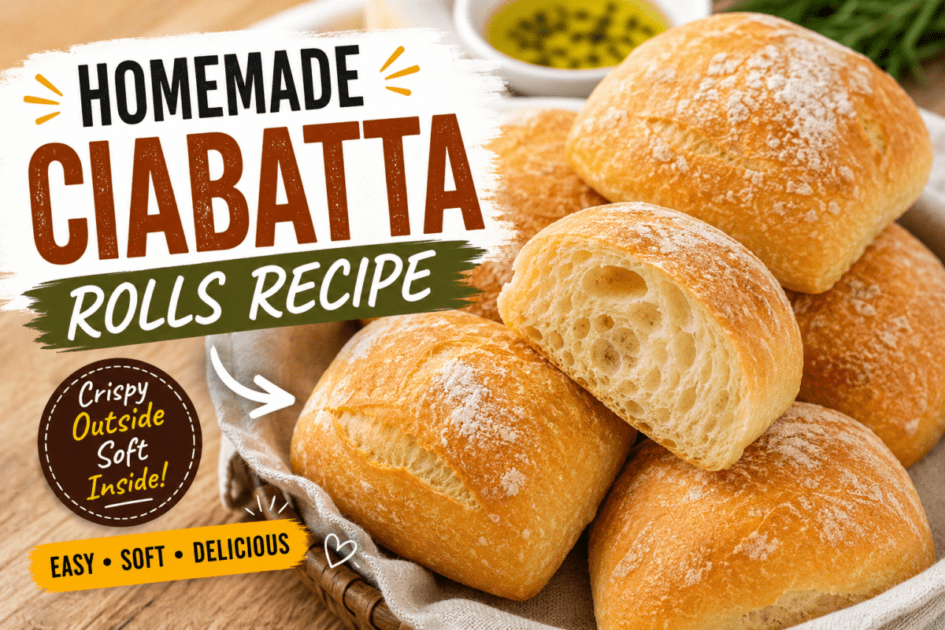
There’s something magical about freshly baked bread filling your kitchen with a warm, comforting aroma. These homemade ciabatta rolls are the perfect combination of crispy crust and airy, chewy texture inside. Whether you use them for sandwiches, burgers, soups, or simply enjoy them with butter, these rustic Italian rolls are guaranteed to impress.
Unlike ordinary dinner rolls, ciabatta rolls have a beautifully open crumb with lots of air pockets, giving them their signature artisan look and texture. The best part? You don’t need to be a professional baker to make them at home.
What Are Ciabatta Rolls?


Ciabatta is a traditional Italian bread known for its rustic appearance and light, airy interior. The word “ciabatta” actually means “slipper” in Italian because of the bread’s flat, elongated shape. Ciabatta rolls are the smaller sandwich-sized version of this beloved bread.
These rolls are famous for:
- Crispy golden crust
- Soft and chewy texture
- Large airy holes inside
- Rich homemade flavor
- Perfect sandwich structure
Why You’ll Love This Recipe
This homemade ciabatta rolls recipe is beginner-friendly and delivers bakery-quality results.
Reasons to make them:
- No special equipment required
- Simple pantry ingredients
- Amazing texture and flavor
- Perfect for sandwiches and burgers
- Freezer-friendly
- Better than store-bought bread
Ingredients You’ll Need


Here’s everything required for these delicious ciabatta rolls:
Dough Ingredients
- 4 cups bread flour
- 1 ½ teaspoons salt
- 1 teaspoon sugar
- 2 teaspoons instant yeast
- 1 ¾ cups warm water
- 2 tablespoons olive oil
Optional Toppings
- Olive oil for brushing
- Flour for dusting
- Italian herbs
- Sesame seeds
Step-by-Step Homemade Ciabatta Rolls Recipe
Step 1: Activate the Dough
In a large mixing bowl, combine warm water, sugar, and yeast. Let it sit for about 5–10 minutes until foamy.
Add olive oil, flour, and salt. Mix until a sticky dough forms.
Step 2: Knead the Dough


Ciabatta dough is wetter than regular bread dough. Knead for about 8–10 minutes until smooth and elastic. If using a stand mixer, use the dough hook attachment.
Don’t add too much extra flour — the sticky texture helps create those famous airy holes.
Step 3: First Rise
Place the dough in a lightly oiled bowl and cover it with a towel or plastic wrap.
Let it rise for 1 to 2 hours in a warm place until doubled in size.
Step 4: Fold the Dough
Instead of heavy kneading, ciabatta dough benefits from stretching and folding.
Gently stretch one side of the dough and fold it over itself. Rotate the bowl and repeat several times.
This develops gluten and creates the airy texture.
Step 5: Shape the Rolls


Transfer the dough onto a heavily floured surface.
Carefully shape into a rectangle without deflating the air bubbles. Cut into equal square or rectangular rolls using a bench scraper or knife.
Place them on a parchment-lined baking tray.
Step 6: Second Rise
Cover loosely and let the rolls rest for 30–45 minutes.
Meanwhile, preheat your oven to 425°F (220°C).
For extra crustiness, place a pan of hot water in the oven to create steam.
Step 7: Bake the Ciabatta Rolls
Bake for 18–22 minutes until golden brown and crisp.
The rolls should sound hollow when tapped on the bottom.
Allow them to cool slightly before slicing.
Tips for Perfect Ciabatta Rolls
1. Use Bread Flour
Bread flour gives better chewiness and structure compared to all-purpose flour.
2. Don’t Overwork the Dough
Handle gently to preserve the air pockets.
3. High Hydration Is Important
Wet dough equals airy ciabatta.
4. Steam Creates Crispy Crust
Adding steam during baking helps develop the authentic artisan crust.
5. Let Them Cool
Fresh bread continues cooking slightly after baking.
Serving Ideas


These homemade ciabatta rolls are incredibly versatile.
Delicious ways to enjoy them:
- Sandwiches
- Garlic bread
- Breakfast sandwiches
- Burger buns
- Soup side bread
- Olive oil dipping bread
- Panini sandwiches
Storage Instructions
Room Temperature
Store in an airtight container for up to 2 days.
Refrigerator
Not recommended because bread may dry out faster.
Freezer
Freeze for up to 2 months in a freezer-safe bag.
To reheat, bake at 350°F for 5–7 minutes.
Common Mistakes to Avoid
Adding Too Much Flour
This makes the bread dense instead of airy.
Skipping Steam
Steam helps create the signature crust.
Overhandling the Dough
Too much kneading removes air pockets.
Underbaking
Ciabatta should have a deep golden crust.
Frequently Asked Questions
Can I Make Ciabatta Dough Overnight?
Yes! Refrigerating overnight actually improves flavor.
Why Is My Dough So Sticky?
That’s completely normal for ciabatta bread.
Can I Use All-Purpose Flour?
Yes, but bread flour gives better results.
Are Ciabatta Rolls Vegan?
Yes, this recipe is naturally vegan.
Final Thoughts


These homemade ciabatta rolls are everything you want in artisan bread — crispy, chewy, airy, and incredibly flavorful. Once you try making them from scratch, you’ll never want store-bought rolls again.
Perfect for family dinners, sandwiches, or weekend baking projects, this recipe brings authentic bakery-style bread right into your kitchen.
Happy baking!